How Match Bonuses and Referral Chains Intersect with UK Licensing Rules to Guide Multi-Platform Play
Written by Wendy Walter · Sep 29, 2026
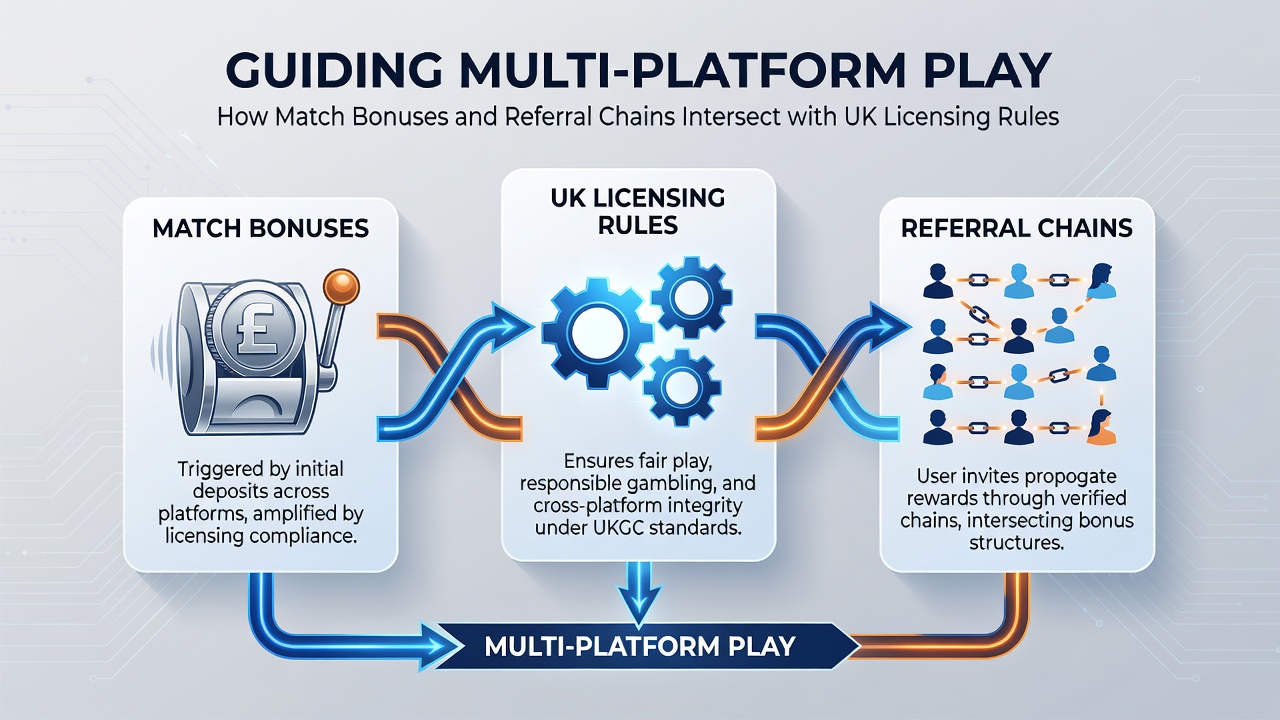
How Match Bonuses and Referral Chains Intersect with UK Licensing Rules to Guide Multi-Platform Play
UK licensing frameworks establish clear parameters for match bonuses, which operators must apply uniformly when players deposit funds on approved platforms, and these same rules extend to referral chains that reward existing users for introducing new participants while maintaining strict oversight on promotional transparency. Licensing conditions require all bonus terms, including deposit match percentages, wagering multiples, and expiration periods, to appear in plain language that players can access before any transaction occurs, and this requirement carries over when referral incentives link multiple accounts across desktop and mobile environments.
Match Bonus Mechanics Within Licensed Operations
Operators structure match bonuses as percentage-based additions to initial deposits, yet licensing protocols cap how these offers combine with other promotions and mandate separate tracking for each platform a player uses. Data from regulatory submissions shows that match rates typically range between 50 and 200 percent on qualifying deposits, with operators required to log every bonus activation to prevent duplication across devices or sister sites under the same license. Those who study these systems observe that players who activate a match bonus on one platform often receive prompts to continue play on another approved channel, provided the operator maintains consistent audit trails that satisfy licensing audits.
Referral Chains and Their Regulatory Boundaries
Referral chains operate through unique codes that generate tiered rewards for both the referrer and the referred player, and UK licensing rules demand that each link in the chain undergoes verification to confirm participants meet age and residency criteria. Figures released by industry monitoring bodies indicate referral programs account for roughly 12 to 18 percent of new account registrations in the British market, with operators required to cap total rewards per chain to avoid excessive inducement. When a referred player deposits and triggers a match bonus, the system automatically allocates credits back through the chain, all while maintaining records that licensing authorities can review for compliance with responsible gambling standards.
Multi-Platform Integration Under Current Rules
Licensing conditions permit operators to offer seamless progression between platforms, allowing a match bonus started on a desktop site to carry forward to a mobile app as long as the operator uses a single player account identifier across channels. Observers note that this setup reduces friction for players who switch devices mid-session, yet it also requires operators to display updated bonus balances and remaining wagering requirements in real time on every interface. As of September 2026, several operators introduced enhanced synchronization features that automatically adjust referral rewards when activity spans multiple licensed products, reflecting updated reporting expectations that emphasize cross-platform data integrity.
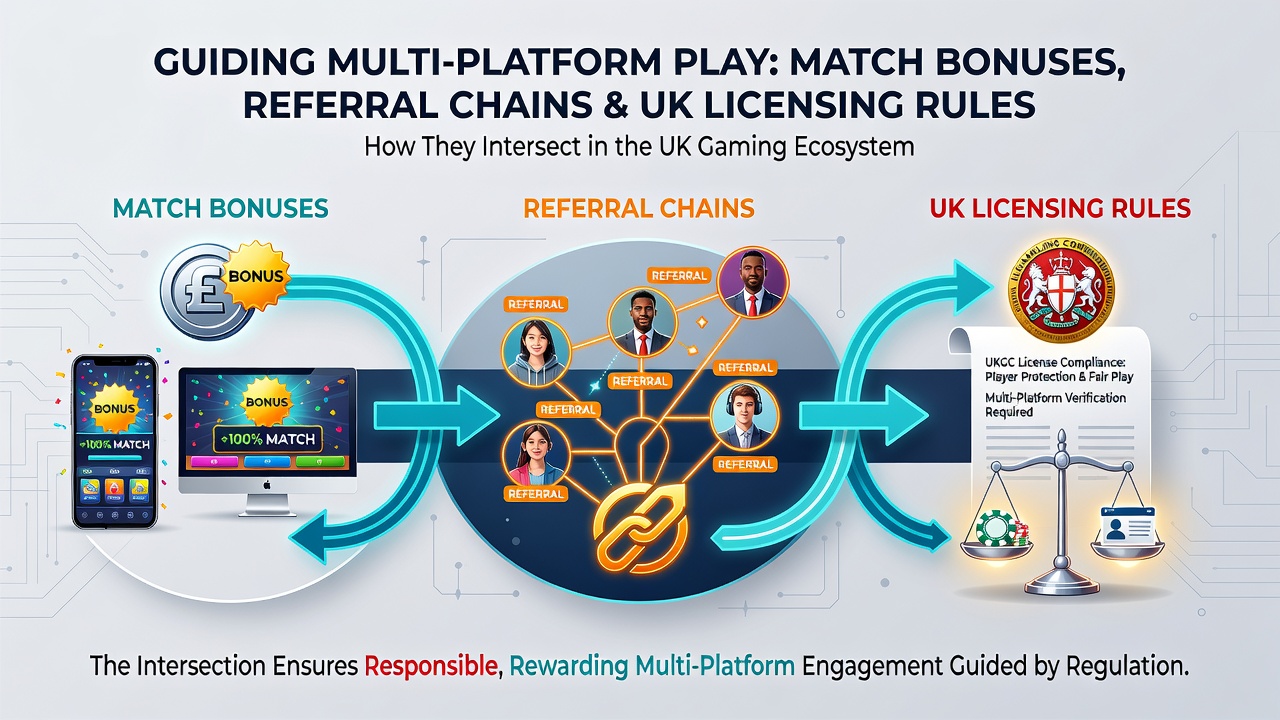
Operators that manage multi-platform environments must ensure referral chains do not create unintended bonus stacking, and licensing guidance directs them to apply a unified calculation method regardless of whether play occurs on web, native apps, or third-party embedded games. Research compiled by the Australian Gambling Research Centre highlights comparable cross-device bonus tracking practices in other regulated markets, underscoring the technical similarities that UK operators have adopted to maintain compliance. Players who engage referral programs across platforms therefore encounter consistent terms that prevent one channel from offering higher rewards than another under the same licensing umbrella.
Compliance Mechanisms and Player Guidance
Licensing rules compel operators to provide clear pathways for players to review how match bonuses and referral credits interact when accounts span several platforms, and this includes dedicated help sections that outline transfer limits and any applicable cooling-off periods. Reports from the International Association of Gaming Regulators document how unified tracking systems reduce disputes by displaying a single ledger of all active promotions, a practice that UK licensees have integrated to align with domestic standards. Those who monitor player behavior patterns find that transparent multi-platform interfaces correlate with higher retention rates because users understand exactly when and where their bonuses remain valid.
Conclusion
UK licensing rules shape the way match bonuses and referral chains function across platforms by enforcing uniform terms, verified tracking, and real-time reporting that operators must follow on every channel. These requirements create structured environments where players can move between desktop and mobile access points while their bonus status and referral progress remain synchronized under a single licensed framework. The result is a system that guides multi-platform play through consistent compliance measures rather than fragmented promotional offers.